How much are UK rents in 2026?
Average UK private rents reached £1,381 a month in the year to April 2026, a 3.5% annual increase according to the ONS. That is the slowest rate of growth since March 2022, down from a peak of around 9% in early 2024. Rents are still rising — just far more gently than during the post-pandemic surge.
The deceleration is consistent across the major indices. ONS private rental inflation fell from 9.1% in 2024 to 4.0% by the end of 2025, easing further into the 3–3.5% range through early 2026. Zoopla put annual growth even lower at 2.1% by May 2026, declaring that “the rental boom is over.” The common thread: tenants have reached the limit of what they can afford without matching wage growth, and that ceiling is finally capping increases.
What about UK house prices?
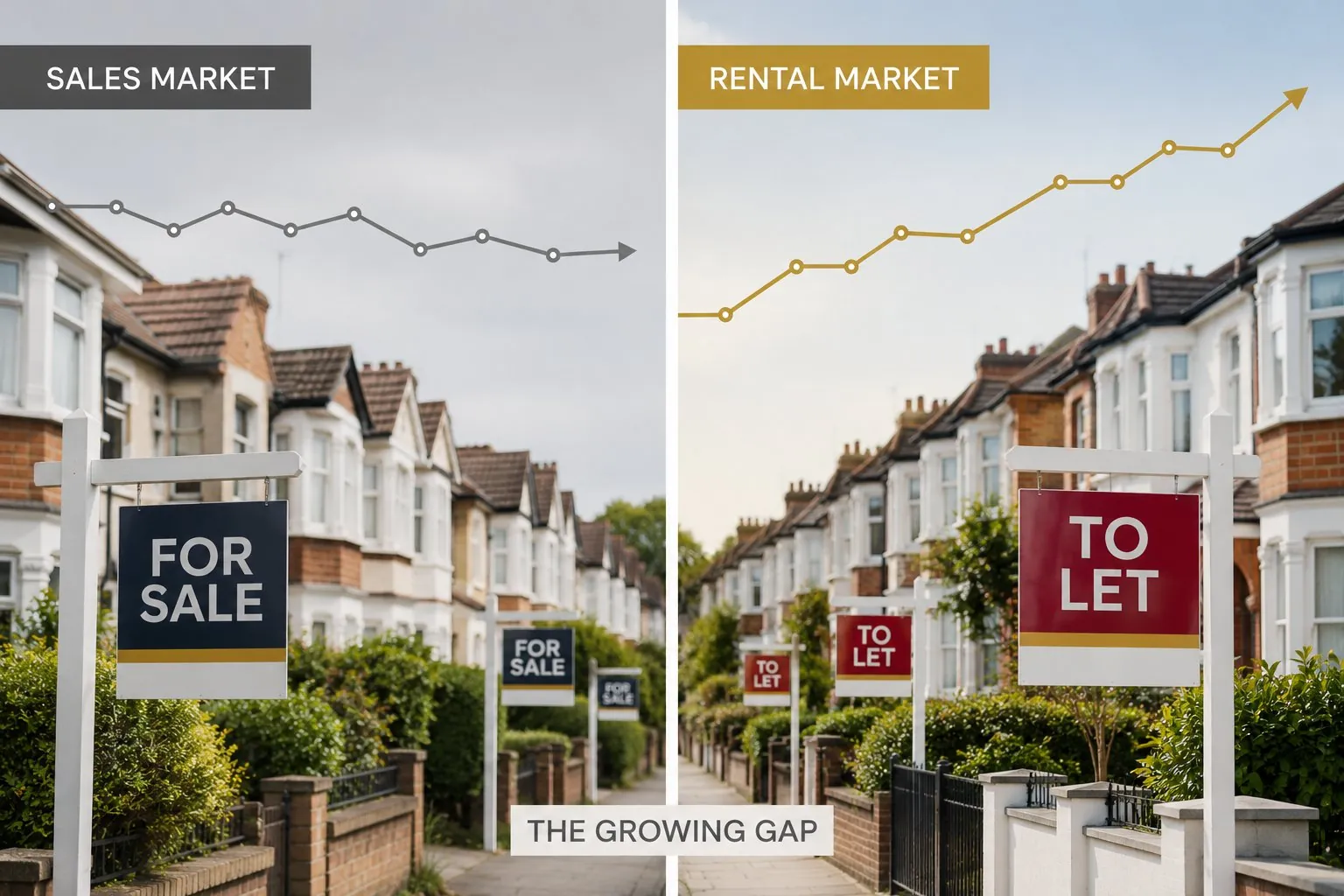
Average UK house prices rose just 1.3% in the year to January 2026, reaching £268,000 — down from 1.9% growth the previous month. England averaged £290,000 (up 1.1%), with first-time-buyer prices and mortgage-backed purchases broadly flat or slightly down year-on-year. In short, the sales market has effectively stalled in real terms while the rental market continues to climb.
This divergence matters. When house-price growth slows but rents keep rising, rental yields improve — which is why buy-to-let investors are once again paying close attention to the income side of the equation rather than betting on capital appreciation.
Where are rents rising fastest — and falling?
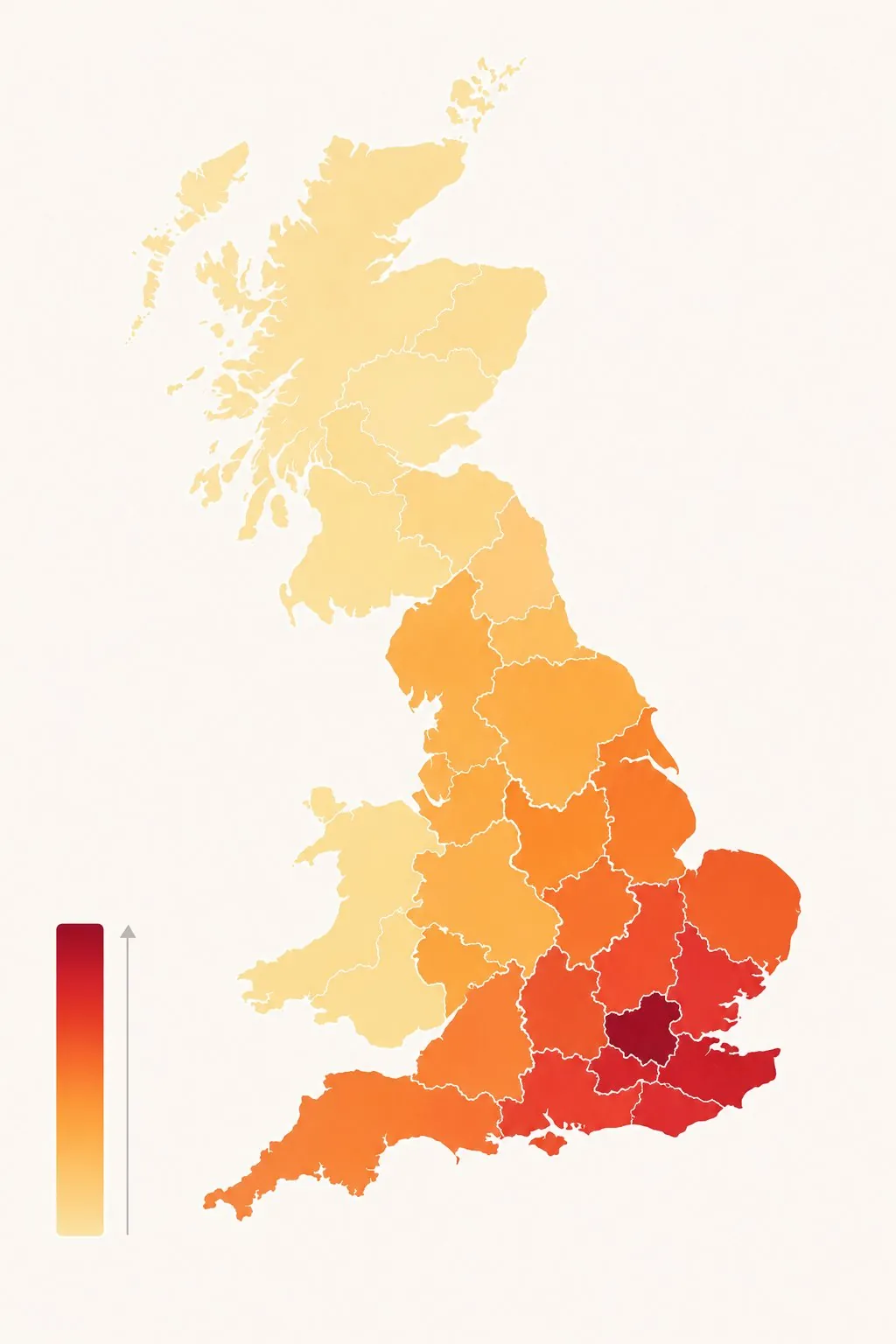 The headline national figure hides two very different markets. In 2026 the cheapest regions are seeing the fastest rental growth, while the most expensive areas have slowed sharply or stalled.
- North East: the fastest-growing region at 6.5–7.6% annual growth, despite having the lowest absolute rents (around £770).
- London: the highest rents in the country (£2,273 average) but the slowest growth at just 1.7%, a normalisation after double-digit spikes in 2023–2024.
- West Midlands: the weakest region at around 0.4% growth.
- Falling markets: rents are actually declining in cities such as Birmingham (-1.1%), Nottingham (-0.9%) and Bournemouth (-1.7%).
- Hotspots: towns like Carlisle (9.1%), Kilmarnock (9%) and Halifax (6.5%) are still posting 7–9% rises.
The lesson for investors is that “the UK rental market” is no longer a single trend. Affordability has become the dominant force: where rents are already high relative to local incomes, growth has run out of road; where they remain low, there is still room to climb.
Why is supply still so tight?
The single biggest driver of rental inflation remains the imbalance between supply and demand. There are roughly 25% fewer homes available to rent than before the pandemic, and new investment in the private rented sector remains low.
Several policy changes have combined to push some landlords out:
- Section 24 tax restrictions removed full mortgage-interest tax relief for individual landlords.
- The 5% stamp duty surcharge raised the cost of buying additional property.
- The Renters’ Rights Act (in force from May 2026) reshaped possession and tenancy rules.
- Tightening EPC and Decent Homes standards added upgrade costs.
Fewer landlords entering — and some exiting — means the supply shortage that underpins rents is unlikely to ease quickly, even as tenant demand softens from its peak.
What's the outlook for the rest of 2026?
Forecasts point to continued moderate growth. Most analysts expect full-year 2026 rental growth in the 2–3.5% range, with Savills projecting cumulative growth of around 12% through to 2030. House-price growth is expected to stay subdued in the low single digits. For income-focused investors, the combination of flat prices and steadily rising rents continues to favour well-chosen rental property — particularly in high-yield regions and resilient commuter markets.
The bottom line
The 2026 statistics tell a clear story: rental growth has cooled to its slowest in four years, house prices are broadly flat, and the market has fractured into fast-growing affordable regions and stalling expensive ones. The constant beneath it all is undersupply — and until more homes reach the rental market, upward pressure on rents will persist.
BAS Real Estate helps landlords and tenants navigate the market with current, local data. For tailored advice on letting or renting in the Windsor area, contact our team.
Sources
-
- Office for National Statistics, Private rent and house prices UK bulletin, March–April 2026
- Zoopla Rental Market Report, June 2026
- HomeLet Rental Index, 2026
Savills residential forecast, 2026